Registration, Networking Arrival Break and Exhibition Viewing
9:00am
WELCOME
Grace Aungier
Portfolio Director, Business Post
9:00am
WELCOME
9:00am
OPENING REMARKS FROM THE CHAIR
Elaine Burke
Sci-tech journalist, editor and broadcaster
9:05am
OPENING REMARKS FROM THE CHAIR
Jennifer Cox
Director for Ireland, Women in Cyber Security (WiCyS) UK & Ireland
9:10am
GOVERNMENT ADDRESS
9:10am
PARTNERS IN PUBLIC SERVICE TRANSFORMATION
A transformation strategy to deliver for the public and to build trust.
Orla McBreen
Chairperson, Association of Higher Civil and Public Servants (AHCPS)
9:10am
GOVERNMENT KEYNOTE ADDRESS
9:15am
KEYNOTE ADDRESS
Embedding diversity, equity, and inclusion in our commitment to excellence
Diversity, equity, and inclusion (DEI) plays a vital role in shaping Ireland’s future. Talent is one of Ireland’s most valuable natural resources, and we have seen the power of embracing DEI principles to empower organisations and drive economic prosperity. It is imperative to ensure that we have access to a diverse pool of talent essential for continued growth and innovation. DEI is not merely a checkbox; it is an ongoing journey that can yield positive impacts at every stage. Intentional efforts to promote inclusivity can lead to transformational change.
Áine Fanning
Chief Sales & Marketing Officer, Cpl Group
PAVING THE WAY IN EDUCATION
9:25am
PRESENTATION
FROM IDEA TO IMPACT – WORKING WITH PUBLIC AND PRIVATE STAKEHOLDERS
Join us to hear from the Murphy Sisters, creators of the ACT app, whose visionary approach is transforming how communities access public resources. Discover how youth-led tech is shaping the future of public leadership. The winners of the BT Young Scientist & Technology Exhibition 2025 tell us about Aid Care Treat (ACT), a medical assistance app designed to support emergency healthcare responses. The Murphy sisters talk about how they spent the last year working with public and private stakeholders on their app which also has the capability to share precise geolocation co-ordinates to assist medical services and has the potential to make a real difference in helping citizens in an emergency situation.
Ciara, Saoirse and Laoise Murphy
Winners of the Young Scientist & Technology Exhibition 2025, Presentation Secondary School, Tralee
TACKLING THE ROAD BLOCKS
9:30am
KEYNOTE PANEL DISCUSSION
Accelerating female leadership in the public service
This panel will bring together thought leaders, innovators and leaders to discuss accelerating female participation at senior levels in the public sector. They will explore how we can make it more attractive for women to join, and stay in the workforce; what more the government can do to get more women into leadership positions; what policies and initiatives are being implemented. They will also discuss how we can embrace equity to inspire all future women including those with disabilities, members of the LGBTQIA+ community, ethnic and religious groups as well as those from less well-off socio-economic backgrounds to reach leadership roles in the public sector.
Laura O’Donovan Calvert
Business Development Director, Irish Centre for Diversity (ICFD)
Breda Burke
Principal Officer and Head of Human Resources, Houses of the Oireachtas Service
Dr Siobhan Roche
Director of Science for the Economy, Research Ireland
Lye Ogunsanya
Ireland United States Alumni Association
9:45am
PANEL DISCUSSION
NEXT GENERATION LEADERSHIP – EMPOWERING YOUNG INNOVATORS IN PUBLIC SERVICE AND COMMUNITY IMPACT
Expert speakers will outline how early support from the educational eco-system, business mentoring, and local government initiatives foster the development of impactful, civic-minded education. They will discuss the role of educators in equipping girls and women to take on leadership roles and how corporate champions can create leadership pathways through commitment to empowering women in their organisations.
The panel will also discuss some innovative partnership-driven approaches where industry is working closely with third level education bodies across the country to create tailored courses that will reflect the skills needed for jobs of the future.
Topics will include:
Educating the future workforce for jobs that don’t even exist yet
Cross-sector learnings on inclusive policies
Public Private Partnerships that benefit the public sector
The importance of role-modelling and visibility for young women
Building pathways from innovation to policy influence
Aoife McLysaght
Government Science Advisor and Chair, National Science Advice Forum
Orla Feely
President, University College Dublin
Karen McAuley
Director of Policy for Children and Vulnerable Adults Coimisiún na Meán
EDUCATING THE PUBLIC SECTOR OF THE FUTURE
10:00am
KEYNOTE ADDRESS
Tackling the road blocks
Linda Doyle
President & Provost, Trinity College Dublin (TCD)
10:15am
PANEL DISCUSSION
Educating the public sector workforce of the future
The panel will outline the educational programmes and initiatives designed to inspire, engage and encourage female participation from early childhood through primary, secondary and third level educational system. What is the vision for the type of education system required to prepare learners for the future? What are the challenges and inequities for young women accessing educational programmes? How is the higher education sector creating a more inclusive approach to the talent pipeline? What capacity building measures are needed to support teachers? What access programmes are available for students?
The panel will also discuss how some companies are delivering on continuous learning and development opportunities for their employees and how these companies, whose education programs align with their business goals see increased retention, engagement and overall productivity.
the role of educators in equipping girls and women to take on leadership roles
modernising career guidance to be reflective of today’s job market
developing leadership skills for emerging female leaders
the value of employee continuing education
Bernie McNally
Secretary General, Department of Education
Dr Eilish McLoughlin
Associate Professor, School of Physical Science, Dublin City University (DCU)
Colin Mac Hale
Chief Revenue Officer, Santegic
Sheila Porter
Founder and CEO, SciFest
WOMEN IN HEALTH: PAVING THE WAY FOR INNOVATION IN WOMEN’S HEALTHCARE
10:15am
KEYNOTE ADDRESS
COMPASSIONATE LEADERSHIP IN AN AGE OF INNOVATION
Teresa McNally
Chief Executive Officer, Irish HomeCare
10:30am
Welcome morning tea and networking
WOMEN IN HEALTH: PAVING THE WAY FOR INNOVATION IN WOMEN’S HEALTHCARE
10:30am
PANEL DISCUSSION
COLLABORATING TO TRANSFORM HEALTHCARE THROUGH INNOVATION AND INCLUSION
From digital diagnostics to AI-assisted care pathways, women in the private sector are leading a new wave of health innovation that is transforming how the public sector delivers care. This panel will feature exceptional female leaders in health tech and life sciences who are collaborating with the HSE, government agencies, and academic institutions to co-create scalable solutions for Ireland’s evolving healthcare needs. Panellists will explore how inclusive innovation, cross-sector partnerships, and gender-responsive design are reshaping patient care, access, and equity.
Mary Horgan MD FRCPI FRCP
Chief Medical Officer, Department of Health and Professor of Infectious Diseases, Mater Misericordiae University Hospital
Barbara McGrogan
Cancer Research Scientist, National Cancer Control Programme (NCCP) HSE
Editorial Director, Magazine Brands at Business Post Media Group
11:00am
IN CONVERSATION WITH…
Sinéad Gibney
Chief Commissioner, Irish Human Rights and Equality Commission
11:00am
Coffee & Networking Break
11:15am
PANEL DISCUSSION
How do we get more women into senior leadership roles in the Public Sector?
In this panel discussion we will explore how we are making it more accommodating for women to join, and stay in the workforce. We will discuss the attitudinal and structural barriers that exist and what more the government can do to get more women into leadership positions as well as what are the measures that have been taken, and are they enough?
Dr Salome Mbugua
Chairperson of the Equality, Diversity & Inclusion Project Board, publicjobs.ie and Member of the Irish Human Rights and Equality Commission
Siobhán McKenna
Head of Diversity and Inclusion, publicjobs.ie
11:15am
WELCOME BACK FROM THE CHAIR
Jennifer Cox
Director for Ireland, Women in Cyber Security (WiCyS) UK & Ireland
11:20am
EUROPEAN KEYNOTE ADDRESS
Women in leadership: the reality v the hype
Mairead McGuinness
EU Commissioner for Financial services, financial stability and Capital Markets Union
11:30am
ACCELERATING FEMALE LEADERSHIP IN THE PUBLIC SECTOR
Educational and organisational pathways to promotion
How tailored leadership programmes, executive education, and upskilling initiatives help women develop the capabilities and confidence to step into senior roles
Policies, culture shifts, and talent pipelines that remove systemic barriers and create clear pathways to promotion for female leaders
Fiona Buckley
Irish Management Institute (IMI)
WOMEN LEADING IN THE INNOVATION ECOSYSTEM
11:30am
CLIMATE & THE JUST TRANSITION: WOMEN SHAPING IRELAND’S GREEN FUTURE
The critical role of women’s participation and leadership in advancing a just transition
11:40am
PANEL DISCUSSION
Keeping pace with the advances in technology
By empowering women in tech, we unlock an organisation’s full potential. From using new skills to driving innovation and economic growth to fostering a more equitable and socially conscious future, investing in women in tech is a strategic decision with far-reaching consequences. Innovation in artificial intelligence (AI) is revolutionising women’sempowerment by expanding economic opportunities, enhancing educational access, improving healthcare accessibility, and increasing safety.This panel will discuss how government, policy makers, educators and businesses can collaborate to empower women with the technology and skills necessary for a better future.
Topics will include:
the benefits and challenges that come with fast-paced innovation
Artificial Intelligence (AI) – addressing the gender bias to achieve ethical AI
how the EU can best regulate AI while boosting innovation, ethical standards and trust in technology
how digital and technology leaders can focus strategy to ensure that they add maximum value to the top and bottom line
Anne Marie Tierney-Le Roux
Senior Vice President, Global Enterprise Technology, IDA Ireland
Dr Susan Leavy
Member, Irish Government AI Advisory Council
Elaine Burke
Sci-tech journalist, editor and broadcaster
11:45am
IN CONVERSATION WITH....
The journey of working in traditional male environments
Jacqui Mc Crum
Secretary General, Department of Defence at Department of Defence
11:45am
PANEL DISCUSSION
THE CHALLENGES OF AI IN TRANSFORMING OUR WORLD
By partnering on policy, innovation, and sustainability, companies and governments can ensure that AI infrastructure is secure, scalable, and socially responsible. The impact of artificial intelligence (AI) is transforming how all sorts of projects are designed, delivered, and managed across sectors such as transport, energy, water, communications, and the built environment. A collaborative approach is key to ensuring AI’s growth aligns with national goals for economic development, sustainability, and digital sovereignty. A responsible AI framework is crucial for developing, deploying, and using AI systems in a way that is safe, ethical, and trustworthy, with a focus on human-centred design and societal well-being.
Jean Carberry
Assistant Secretary Digital Division, Department of Enterprise, Tourism and Employment
AnnMarie Farrelly
CEO, Fingal County Council
Naomh McElhatton
Irish Ambassador, Women in AI
Mariana Chihenseck Blanco
Engagement Programme Lead, Smart Docklands
12:00pm
PANEL DISCUSSION
Attracting more women into politics and the measures being taken to retain them
Catherine Noone
Lawyer and former Senator
Alison Cowzer
Co-founder of East Coast Bakehouse
Damien English TD
Former Minister and Fine Gael spokesperson on Finance
12:15pm
PANEL DISCUSSION
Mastering self-promotion and other strategies for career success
Self-promotion has long been associated with professional success and with decisions relating to hiring and promotions, including promotions to top management positions. This then becomes an issue of major concern when considered with research showing women are significantly less likely to self-promote than men.
This panel will discuss how to amplify your own voice and to be your own role model. Learn how to harness the power of networks and networking to propel your career forward and to navigate your career progression in the public sector. Strategic connections are unlocking doors and creating opportunities like never before so effective communication and negotiation skills are crucial for women leaders
Sabrina Staunton
Women in Tech Ireland Chapter Director, Executive & Leadership Coach
Roisin Duffy
Chairperson, Women on Air
12:15pm
SPOTLIGHT SESSION
PEOPLE POWERING PROGRESS
Hear how Cpl is helping Ireland’s public and private sectors to build the workforce of the future from leadership pipelines to inclusive hiring strategies. Cpl is Ireland’s leading talent and workforce solutions company that does specialised work with public sector and semi-state clients.
Topics will include:
supporting women in leadership and inclusive recruitment practices
data and insights on emerging skills, AI in recruitment, and workforce trends
how they partner strategically with organisations to attract, retain, and empower diverse talent
Áine Fanning
Chief Sales & Marketing Officer, Cpl Group
12:30pm
Networking Lunch Break and Exhibition Viewing
12:30pm
CREATING A LADDER FOR OTHERS
The power of formal and informal mentorship networks, sponsorship by senior leaders, and peer support in accelerating career progression
Driving gender equity in leadership requires allies of all genders. This session spotlights leaders who are breaking down barriers through mentorship, sponsorship, and peer support, while embedding equality into organisational culture. Together, they’ll explore how real allyship moves beyond words to measurable impact.
This discussion will examine how organisations can:
build intentional mentorship and sponsorship programmes that actively support underrepresented talent
empower senior leaders to champion diversity and inclusion through everyday actions and strategic advocacy
foster peer networks that create psychological safety and a sense of belonging across teams and hierarchies
translate commitments into measurable outcomes from equitable promotion pathways to inclusive leadership pipelines
share practical examples of allyship in action, highlighting the ripple effect of inclusive leadership on team performance, innovation, and culture
Sheila Porter
Founder and CEO, SciFest
Peter Clifford
Head of Strategy, Research Ireland
Dr Úna May
CEO, Sport Ireland
Paula Hilman
Assistant Commissioner Roads Policing & Community Engagement, An Garda Síochána
12:45pm
PRESENTATION
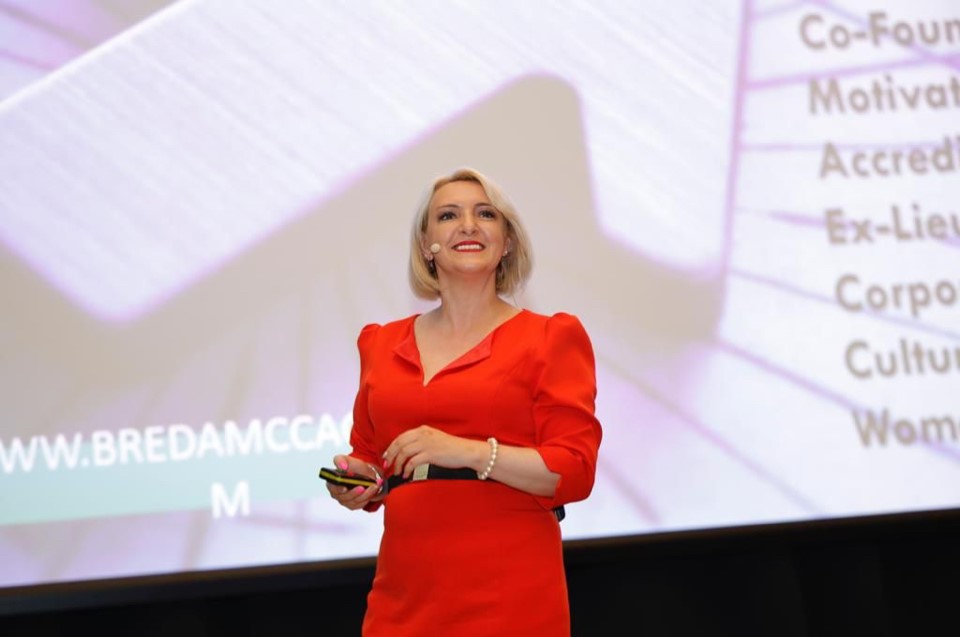
That Promotion, Nailed
Breda will discuss not only the reasons you should want that promotion, but also how to go about getting it. She coaches thousands of professional executive women every year helping them to upgrade and transform their careers and lives. Breda’s insights to mindset and emotional intelligence will help you to build up your confidence and support your journey from ambition to abundance.
Breda McCague
CEO, AIMING4AWESOME
1:00pm
Lunch & Networking Break
1:00pm
Networking Lunch Break and Exhibition Viewing
1:30pm
MINISTERIAL ADDRESS
Helen McEntee TD
Minister for Education and Youth
1:45pm
PANEL DISCUSSION
Learnings from approaches to diversity and inclusion in the private sector
The private sector has not been without its challenges in overcoming the barriers to getting women on boards and executive roles. However, it has the freedom to innovate to solve these problems and now thousands of examples of how good strategy and programs can yield success.
In this panel we will look at what measures the private sector are taking and how could these be applied to tackle this challenge in the public sector.
Lorna Conn
CEO, CPL
Gillian Harford
Country Executive, 30% Club
Joanna Murphy
CEO, Taxback
2:00pm
WELCOME BACK FROM THE CHAIR
Elaine Burke
Sci-tech journalist, editor and broadcaster
2:00pm
WELCOME BACK FROM THE CHAIR
Jennifer Cox
Director for Ireland, Women in Cyber Security (WiCyS) UK & Ireland
FINANCING THE FUTURE
2:05pm
MIND THE GAPS: PAY, PENSIONS AND POWER IN THE PUBLIC SECTOR
What do our gender pay gap reports reveal about who holds the power in the public sector?
Jennifer created PayGap.ie to make gender pay gap data accessible to everyone, but the reports hold much more than just pay gap information. In this session, she shares insights into the reports, and explores what that data means for women in the public sector.
Jennifer Keane
Founder, PayGap.ie
2:05pm
AFTERNOON KEYNOTE ADDRESS
Financing empowerment
Jack Chambers TD
Minister for Finance
2:05pm
GOVERNMENT KEYNOTE ADDRESS
LEADING WITH PURPOSE: CHANGING THE FACE OF PUBLIC SERVICE
2:15pm
IN CONVERSATION WITH…
An Garda Síochana is one of Europe’s most female police forces – how did we get here and what are the lessons for other public sector organisations?
Nóirín O’Sullivan
Former garda commissioner
2:20pm
PANEL DISCUSSION
Tackling the gender gap in Irish politics
Women are significantly out-numbered by men in politics in Ireland. Gender quota legislation introduced prior to the 2016 General Elections resulted in a 6.5 percentage point increase in those elections from 15.7 per cent of seats held by women to 22.2 per cent. In the last election the increase in the number of women elected increased from 20.1 per cent to 23.9 per cent, a rise of just 3.8 percentage points! There is some progress but we need greater momentum.
This panel will discuss:
the various barriers to entry that exist for women
the measures already in place that are making an impact and any further policies and measures in legislation or otherwise that may be effective in increasing the amount of women who are attracted to politics as a career
gender quotas – are they working?
the culture of political parties and measures that can be taken by parties to increase female participation in politics
how can we encourage more men to take on the role of male champions of change?
Catherine Noone
Lawyer and former Senator
Frances Fitzgerald
Member of the Gender Equality Advisory Committee to the G7 and former MEP
Lynn Ruane
Independent Senator, Seanad Eireann
Kate O’Connell
TD, Dublin Bay South Constituency
2:25pm
PANEL DISCUSSION
THE FUTURE OF DATA-DRIVEN DECISION-MAKING
Effective public service depends on sustainable, strategic investment and women in finance are at the forefront of making that happen. This panel brings together female finance leaders from across the public sector, who are shaping Ireland’s financial and digital future. Their work spans deployment of AI and digital tools that drive smarter, more transparent decision-making. Together, they will explore how technology and AI are transforming financial governance and how collaboration is accelerating projects that serve communities and close the equity gap.
Topics will include:
Technology as an enabler of innovation, leadership, and better public service outcomes
How AI and data analytics can enhance transparency, governance, and decision-making
Supporting Irish businesses to grow and scale, and to become global leaders in their field
Leveraging technology to measure and close gender pay and investment gap
Expanding access to finance for female founders and entrepreneurs
Ensuring a pipeline of fiscal talent by promoting maths careers for girls and young women
Louise McKeever
CIO, Dept of Agriculture, Food and the Marine
Marcella Flood
Chief Operations Officer, Central Bank of Ireland
Marina Donohoe
Head of Research, Innovation & Infrastructure, Enterprise Ireland
Sheila Donegan
Director, CALMAST, South East Technological University (SETU)
2:30pm
PANEL DISCUSSION
MALE CHAMPIONS OF CHANGE
In this panel male leaders who are setting an inclusive culture from the top will discuss their approach to ensuring females are supported in the workplace and what more could and should be done in the public sector.
Aongus Hegarty
Co-Chair, Balance for Better Business
Brian Sheehan
CEO, Women for Election
Alan Phelan
Chief Operations Officer, Teagasc
2:50pm
SPOTLIGHT ON… WOMEN LEADERS AND ROLE MODELS
In this session we turn the spotlight on women leaders in the public service and hear some quick-fire presentations on their experiences
Why don’t more women become CEOs? A perspective from the seafood sector A host of studies suggest that female leaders are often less favourably received with women making up just 19% of CEOs in Ireland. Caroline gives a perspective on why less women than men are getting to the top and how we could change that
Digital Health Transformation
Enabling digital transformation within the new redesigned care pathways and the best use of data to identify areas of most need
Lorraine Smyth
e-Enablement and Digital Solution Management Change and Innovation, HSE
Caroline Bocquel
CEO, Bord Iascaigh Mhara (BIM)
2:55pm
CLOSING REMARKS FROM THE CHAIR
3:00pm
FIRE SIDE CHAT
The realities and challenges of being a female leader in government
Claire D.Cronin
United States Ambassador to Ireland
3:00pm
SUMMIT ENDS
3:15pm
Cant’t see it, can’t be it
Dae Hanley
Governance Standards, Criminal Justice, LGBT+ Staff Network Committee Member, Proud to Work for Ireland Network Co-Chairperson, Department of Justice
3:25pm
CLOSING REMARKS FROM THE CHAIR
Jennifer Cox
Director for Ireland, Women in Cyber Security (WiCyS) UK & Ireland